
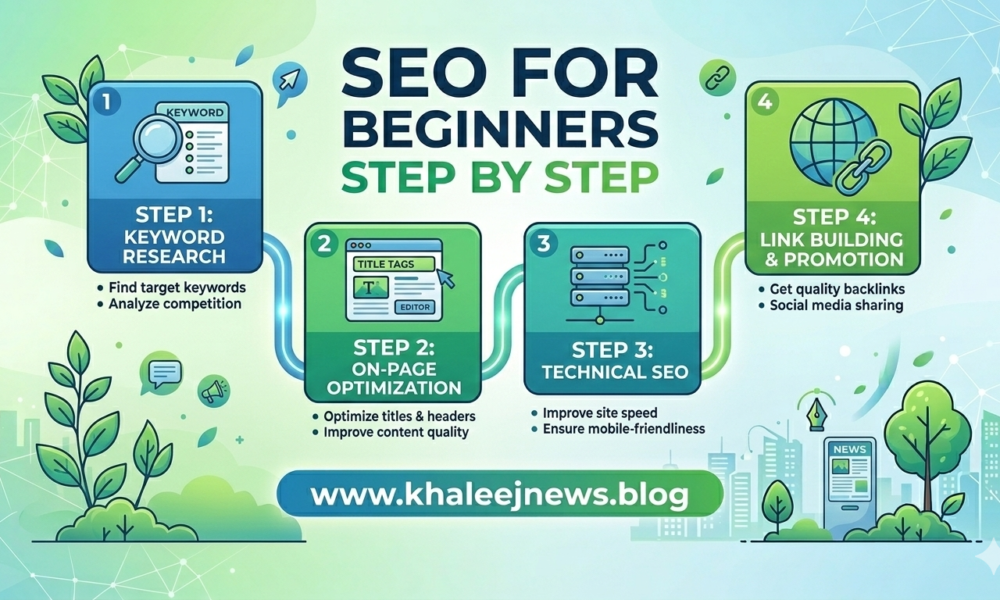
The digital landscape is more crowded than ever, but the fundamental goal of any website owner remains the same: getting found. If you are just starting out, the world of search engine optimization can feel like a labyrinth of technical jargon and shifting algorithms. However, mastering SEO for beginners step by step doesn’t require a computer science degree. It requires a solid understanding of how search engines perceive value and how users interact with content.
In 2026, search engines have evolved beyond simple keyword matching. They now prioritize “User Intent” and “Topic Authority” above all else. This guide will walk you through the essential pillars of SEO to help you build a sustainable, high-ranking online presence from the ground up.
Phase 1: The Foundation of Keyword Research
Before you write a single word, you need to know what your audience is actually typing into that search bar. Keyword research is the compass that guides your content strategy.
- Identify Your Niche: Don’t try to be everything to everyone. Focus on a specific “seed” topic.
- Use Tools Wisely: Use platforms like Google Keyword Planner, Ahrefs, or Semrush to find terms with high volume but manageable competition.
- Focus on Long-Tail Keywords: Instead of targeting “shoes,” target “best running shoes for flat feet.” These are easier to rank for and often have higher conversion rates.
- Analyze Search Intent: Is the user looking to buy (transactional), learn (informational), or find a specific site (navigational)? Align your content with this intent.
When implementing SEO for beginners step by step, remember that keywords are not just about search volume; they are about understanding the problem your audience is trying to solve.
Phase 2: On-Page Optimization
On-page SEO is the practice of optimizing individual web pages to rank higher. This is the part of the process where you have the most control.
1. Title Tags and Meta Descriptions
Your title tag is the first thing a user sees. It should be compelling and include your primary keyword near the beginning. The meta description, while not a direct ranking factor, acts as “ad copy” that encourages users to click your link.
2. Header Tags (H1, H2, H3)
Structure your content using headers. This helps search engines understand the hierarchy of your information. Your H1 should be your main title, while H2s and H3s break down subtopics.
3. URL Structure and Image Alt Text
Keep your URLs short, descriptive, and clean. Avoid long strings of numbers. Additionally, always include “Alt Text” for your images. This describes the image to search engines and improves accessibility for visually impaired users.
Phase 3: Content Quality and E-E-A-T
In the era of AI-generated content, “thin” or “fluff” content will no longer cut it. Google’s E-E-A-T (Experience, Expertise, Authoritativeness, and Trustworthiness) guidelines are more critical than ever. To truly succeed with SEO for beginners step by step, you must create content that provides genuine value.
- Readability: Use short paragraphs, bullet points, and clear language.
- Multimedia Integration: Incorporate high-quality images, videos, and infographics to keep users engaged.
- Internal Linking: Link to other relevant articles on your site. This keeps users on your site longer and helps search engines crawl your pages more effectively.
- Content Updates: 2026 search engines love “freshness.” Regularly update your old posts with new data and insights to maintain their rankings.
Phase 4: Technical SEO and Core Web Vitals
You can have the best content in the world, but if your site doesn’t load or is broken, no one will see it. Technical SEO ensures that search engine “spiders” can easily find and index your site.
- Mobile-First Indexing: Most searches now happen on mobile devices. If your site isn’t perfectly responsive, you won’t rank.
- Site Speed (LCP): Users expect a page to load in under 2.5 seconds. Use tools like PageSpeed Insights to optimize your Largest Contentful Paint (LCP).
- HTTPS Security: Security is a mandatory ranking factor. Ensure your site has a valid SSL certificate.
- XML Sitemaps and Robots.txt: Submit a sitemap to Google Search Console to tell Google exactly which pages are important.
Phase 5: The Power of Local SEO
If you have a physical business or serve a specific area, Local SEO is your best friend. In 2026, “near me” searches are at an all-time high.
- Google Business Profile: Create and optimize your profile with accurate hours, photos, and descriptions.
- Local Citations: Ensure your Name, Address, and Phone Number (NAP) are consistent across all directories like Yelp or Yellow Pages.
- Customer Reviews: Encourage happy customers to leave reviews. High-quality, positive reviews are a massive signal for local rankings.
Phase 6: Off-Page SEO and Link Building
Off-page SEO refers to actions taken outside of your own website. The most important factor here is backlinks—links from other websites to yours. Think of a backlink as a “vote of confidence.”
- Guest Posting: Write articles for reputable sites in your industry to earn a link back to your site.
- Digital PR: Create newsworthy content that journalists and bloggers want to cite.
- Social Signals: While not a direct ranking factor, a high volume of shares on social media increases the likelihood of people linking to your content naturally.
Phase 7: Voice Search and AI Integration
As we move further into 2026, the way people search is changing. Voice search (via Alexa or Google Assistant) is more conversational and question-based. To optimize for this, focus on natural language and “Featured Snippets”—those boxes of information that appear at the very top of results.
| Strategy | Focus Area | Goal |
| Voice Search | Conversational Phrases | Rank in “People Also Ask” |
| AI Search (SGE) | Deep Context | Be cited as an authoritative source |
| Video SEO | YouTube & Shorts | Capture visual-first audiences |
Phase 8: Measuring Success and Tracking Data
SEO is not a “set it and forget it” task. It is an ongoing process of refinement. You need to track your progress using tools like:
- Google Analytics 4 (GA4): To see where your traffic is coming from.
- Google Search Console: To see which specific keywords are bringing people to your site.
By following SEO for beginners step by step, you can turn data into actionable insights. If a page is getting clicks but has a high bounce rate, maybe the content isn’t answering the user’s question clearly enough.
Common Pitfalls to Avoid
- Keyword Stuffing: Don’t force keywords where they don’t belong. It makes for a poor user experience.
- Buying Low-Quality Links: This can result in your site being penalized or banned from search results.
- Ignoring Mobile Users: A site that looks great on desktop but fails on mobile will never reach page one.
- Expecting Instant Results: SEO is a long-term investment. It usually takes 3 to 6 months to see real growth.
Conclusion
Navigating the world of digital marketing is a marathon, not a sprint. By focusing on a structured approach to SEO for beginners step by step, you provide a clear path for search engines to find, trust, and rank your content. In 2026, the key is to be more “human” than ever—write for people first, and the search engines will follow.
The most important thing you can do today is start. Optimize one page, fix one technical error, or write one high-quality post. Small, consistent improvements lead to massive long-term growth.