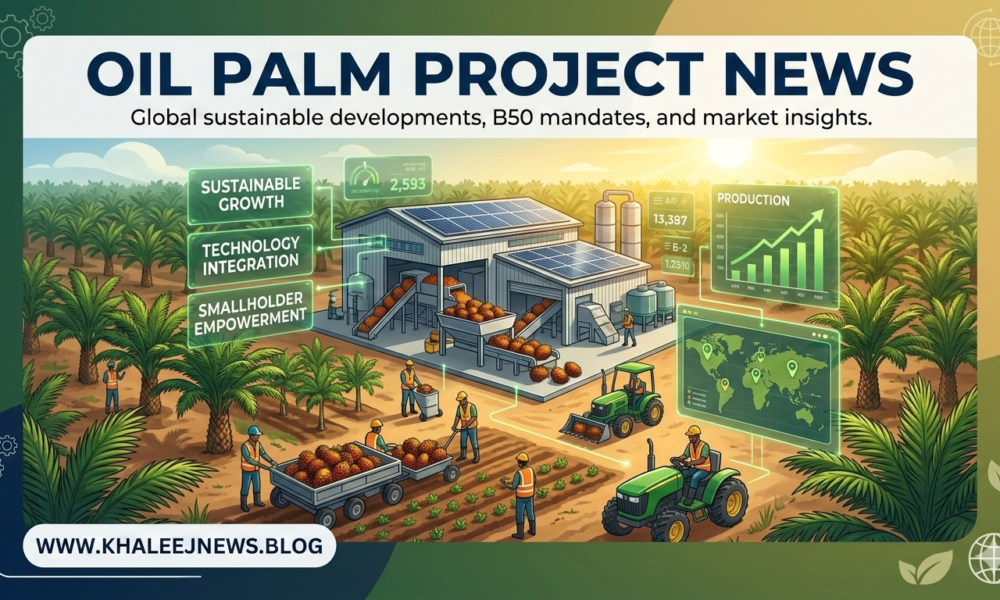
The global landscape for tropical agriculture is currently witnessing a massive transformation. As we move through 2026, the focus of the industry has shifted from mere volume expansion to a sophisticated “quality and compliance” model. Consequently, this shift is driven by a combination of new environmental regulations, such as the European Union Deforestation Regulation (EUDR), and an aggressive push for energy self-sufficiency in Southeast Asia.
The Shift Toward Renewable Energy and Domestic Security
One of the most significant headlines in recent oil palm project news is the implementation of Indonesia’s B50 biodiesel mandate. This ambitious project aims to blend 50% palm-based fuel into the national diesel supply. By comparison, previous years focused on lower blends, but the current move toward B50 reflects a desire for total energy independence. Furthermore, by diverting nearly 20 million kiloliters of fatty acid methyl ester (FAME) into the domestic fuel pool, the Indonesian government is fundamentally altering global supply dynamics.
As a result, this “feedstock squeeze” means that international buyers are now competing more fiercely for a shrinking exportable surplus. For manufacturers of oleochemicals—the building blocks for soaps, detergents, and cosmetics—this represents a structural change in how they source raw materials. In addition, the 2026 outlook suggests that companies are no longer just looking for the lowest price; instead, they are looking for guaranteed access to supply.
Sustainable Initiatives and Smallholder Empowerment
Meanwhile, in Africa, Ghana has taken center stage with its 2026–2032 Integrated Palm Oil Strategy. The Ghanaian government recently announced a $500 million financing facility designed to bridge the country’s 200,000-ton annual production gap. This oil palm project news highlights a growing trend: West African nations are seeking to move “from trade to production” by attracting foreign investment and modernizing local processing plants.
A major component of these new projects is the inclusion of smallholder farmers. In Uganda, for example, the National Oil Palm Project (NOPP) is actively working to establish “hubs” around central processing mills. This model ensures that small-scale growers, who produce roughly 40% of the world’s supply, have access to:
- High-yield, climate-resilient seedlings.
- Modern agricultural machinery and fertilizers.
- Reliable transport infrastructure to minimize post-harvest loss.
- Fair-market pricing through collective bargaining units.
Technology and the “Digital Twin” of Agriculture
However, the “ticket to play” in the 2026 market is now digital. To comply with strict international standards, new plantations are integrating blockchain-backed verification systems. These platforms create a “digital breadcrumb trail” from the exact GPS coordinates of a farm to the final shipping container at the port. Specifically, this allows for real-time monitoring of land-use changes.
In Thailand, on the other hand, the introduction of “CLIMAX Pro”—a carbon footprint calculator—is helping farmers quantify their environmental impact. This is a vital part of latest oil palm project news because it allows producers to tap into the voluntary carbon credit market. Moreover, by proving that their cultivation methods are low-carbon, farmers can generate additional income, making sustainable practices financially viable rather than just a regulatory burden.
Market Dynamics: A Two-Tiered System
In light of these developments, the market is bifurcating. On one side, we have “EU-compliant” grades of oil that command a significant price premium due to their verified, deforestation-free status. Conversely, the second tier consists of standard grades destined for regions with less stringent environmental hurdles.
Key Financial Indicators for 2026
| Indicator | Estimated Value/Trend |
| RSPO-Certified Premium | $35–$40 per Metric Tonne |
| Organic CPO Premium | $400–$500 per Metric Tonne |
| Global Market Size (by 2034) | $80.05 Billion |
| Indonesia Production Recovery | 1.5–2.0 Million Tonnes |
Despite the push for sustainability, the market remains volatile. Early 2026 saw a softening of prices as weather patterns normalized, leading to better yields across Malaysia and Indonesia. Nevertheless, this is tempered by the structural constraints of aging trees and labor shortages, which continue to cap long-term production growth.
Infrastructure: Modernizing the Midstream
The construction of new processing facilities is another area of high activity. Modern oil mills are no longer just focused on extraction; instead, they are becoming “circular economy” hubs. For instance, waste products like palm kernel shells and empty fruit bunches are being repurposed into biomass energy to power the mills themselves.
The latest oil palm project news from major players like IOI Corp and Wilmar indicates a heavy investment in downstream fractionation. Specifically, by creating high-margin, specialty fats—such as cocoa butter replacers and low-contaminant oils—these companies can offset the volatility of the raw commodity market. Thus, the focus is shifting from raw extraction to value-added processing.
“The path forward for the sector is not one of decline, but of transformation. Ultimately, the old model of competing on price and volume is being replaced by a paradigm centered on transparency and trust.” — Industry Analyst Report, March 2026.
Environmental and Social Governance (ESG)
Beyond the economics, the social impact of these projects is under intense scrutiny. The Roundtable on Sustainable Palm Oil (RSPO) has reached new milestones in membership, particularly in Europe. Simultaneously, these organizations are working to ensure that the “social footprint” of the industry matches its economic footprint.
Projects are now required to conduct rigorous social impact assessments, ensuring that:
- Land Rights: Local communities and indigenous groups have their land rights respected through Free, Prior, and Informed Consent (FPIC).
- Labor Rights: Indeed, fair wages and safe working conditions are non-negotiable.
- Biodiversity: High Conservation Value (HCV) areas are mapped and protected, thereby creating corridors for wildlife such as orangutans and tigers.
Looking Ahead: The Future of the Palm Sector
In conclusion, as we assess the first quarter of 2026, the oil palm project news suggests a sector in a state of “cyclical tightness.” While production is recovering from previous El Niño impacts, the demand for green energy and food security is growing even faster. Therefore, supply remains the primary concern for global stakeholders.
For investors, the message is clear: the most successful projects will be those that marry high-yield agriculture with digital traceability and community-centered development. In short, the era of “blind commodities” is over; the era of “intelligent supply chains” has begun. To sum up, the evolution of the oil palm industry is a testament to the power of global regulation and technological innovation working in tandem.
From the biodiesel fields of Sumatra to the smallholder hubs of Ghana, the industry is proving that it can be a force for economic development without sacrificing the planet’s health. Still, maintaining this momentum will require continued collaboration between governments, NGOs, and the private sector. As soon as more oil palm project news emerges throughout 2026, the focus will remain on whether these ambitious sustainability goals can be met while keeping food and fuel affordable for a growing global population.