
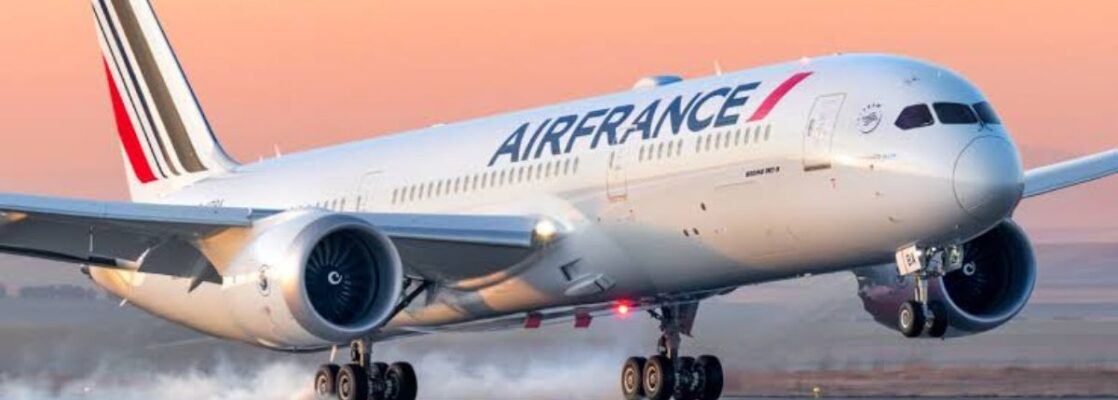
An unusual incident involving an Air France flight from Paris to Chicago has attracted attention after the aircraft turned around and headed back toward France instead of completing its planned journey to the United States.
The flight, identified as Air France AF136, was traveling from Paris Charles de Gaulle Airport to Chicago O’Hare International Airport when its journey took an unexpected turn. Reports indicated that the aircraft was unable to proceed with its planned arrival in Chicago and eventually returned toward Paris after spending several hours in the air.
For passengers, the situation meant a long and frustrating journey that ended back where it had started. For aviation observers, the incident raised questions about what happened during the flight and why an aircraft operating a routine transatlantic service would reverse course after crossing a significant portion of the Atlantic.
What Happened to Air France AF136?
Air France AF136 was scheduled to operate a normal transatlantic service between Paris and Chicago.
The flight departed from Paris Charles de Gaulle with Chicago O’Hare as its destination. The aircraft used for the service was an Airbus A350-900, a long-range aircraft designed for international routes.
Everything appeared to be progressing normally until the aircraft changed its planned route.
Instead of continuing toward Chicago, AF136 eventually turned around and began flying back in the direction of Paris. Reports about the incident described the flight as having been denied landing clearance or facing an operational issue that prevented it from completing its planned arrival.
The unusual flight path quickly became noticeable through aircraft tracking services, where aviation enthusiasts and other observers could see the aircraft reversing direction.
Why Was the Paris Flight Denied Landing in Chicago?
The exact circumstances surrounding the incident are important because the phrase “denied landing” can be interpreted in several ways.
An aircraft cannot simply arrive at an airport and land whenever it chooses. International flights operate within a carefully coordinated system involving pilots, airlines, air traffic control and airport authorities.
Before an aircraft lands, the flight crew must receive the appropriate instructions and clearance. Various operational circumstances can affect whether a flight is able to continue with its planned arrival.
In the case of AF136, reports linked the aircraft’s return to an issue involving landing or operational clearance in Chicago.
However, it would be misleading to assume that the aircraft was simply turned away from the runway without any additional context. Aviation operations are considerably more complicated than that.
A flight may change its plans because of airport restrictions, air traffic considerations, operational requirements or other circumstances that affect the planned arrival.
The Flight Had Already Been in the Air for Hours
One of the most striking aspects of the incident was the amount of time AF136 had already spent flying.
Rather than returning shortly after departure, the aircraft had reportedly been in the air for nearly seven hours.
That made the turnaround particularly unusual.
Long-haul flights are carefully planned around fuel, routing, crew requirements and destination conditions. When an aircraft has already crossed a large part of the Atlantic, turning around represents a major operational decision.
Passengers who had expected to arrive in Chicago after crossing the Atlantic instead faced the prospect of returning to Paris.
For travelers, this can be especially frustrating because many international passengers have onward connections, hotel reservations, business meetings or other commitments waiting at their destination.
Did Air France AF136 Land in Chicago?
No.
The aircraft did not complete its planned arrival at Chicago O’Hare International Airport.
Instead, the flight turned back toward Paris.
This is the central fact behind the reports about the Paris flight denied landing in Chicago.
The flight was supposed to connect the two major cities, but circumstances surrounding its arrival meant that the aircraft ultimately returned toward its original departure point.
The incident does not necessarily indicate that the aircraft itself had a serious mechanical problem. A flight can return or divert for many operational reasons, and a change of route should not automatically be interpreted as an emergency.
What Does Landing Clearance Mean?
For people unfamiliar with aviation, “landing clearance” can sound like a simple permission to touch down.
In reality, landing is part of a highly coordinated process.
Air traffic controllers manage aircraft approaching an airport and determine when and how aircraft can enter the final stages of their journey. Pilots must follow instructions and maintain safe separation from other aircraft.
Airports also operate according to specific procedures and requirements.
If an aircraft cannot receive the necessary clearance to land as planned, the crew may need to wait, hold, divert or consider returning to another airport.
The appropriate decision depends on the circumstances of the flight.
That is why it is important not to jump to conclusions about the AF136 incident without confirmed information from the airline or relevant aviation authorities.
Why Would a Flight Return to Paris?
There are several reasons why an airline might decide that returning to the departure airport is the best option.
The decision can involve factors such as:
- Airport operating restrictions
- Air traffic control issues
- Weather conditions
- Fuel requirements
- Aircraft-related concerns
- Crew duty limitations
- Destination airport availability
- Operational coordination
- Availability of suitable alternative airports
For a long-distance flight, the crew and airline operations team have to consider the situation carefully.
Returning to Paris after several hours may seem inefficient, but aviation decisions are not based simply on the amount of time already spent flying. Safety and operational practicality remain the priorities.
The Airbus A350-900 Involved in the Incident
The aircraft operating AF136 was an Airbus A350-900.
The A350-900 is a modern wide-body aircraft designed for long-distance passenger flights. Airlines use this type of aircraft on routes connecting continents because of its range and efficiency.
Air France operates long-haul services with aircraft from the Airbus A350 family, making the aircraft well suited to a Paris-Chicago route.
The fact that an A350 was able to remain in the air for several hours before turning around also illustrates the capabilities of modern long-haul aircraft.
However, aircraft capability is only one part of an international flight. The journey also depends on airport operations, air traffic management, crew requirements and other factors.
Why Did the Incident Attract So Much Attention?
Unusual flight paths often attract attention because modern flight-tracking websites allow the public to observe aircraft movements.
When a flight follows an unexpected route, aviation enthusiasts can quickly notice that something has changed.
In the case of AF136, the aircraft’s turnaround was particularly noticeable because it had been traveling across the Atlantic before reversing course.
The incident also generated interest because passengers generally expect a Paris-to-Chicago flight to arrive in the United States after several hours.
Instead, the aircraft ended up heading back toward France.
This kind of unusual journey naturally raises questions among passengers and people following aviation news.
What Happened to Passengers?
A flight disruption of this kind can create significant inconvenience for passengers.
People traveling internationally often have carefully arranged schedules. Some may have connecting flights at Chicago O’Hare, while others may be traveling to Chicago for work, holidays, family visits or other reasons.
When an aircraft returns to its departure airport, the airline may need to reorganize travel arrangements.
Depending on the circumstances and applicable airline policies, passengers may be offered rebooking or other assistance.
The exact arrangements can vary from one situation to another.
Passengers affected by an unexpected flight disruption should check communications from the airline for information about their next flight, accommodation and other arrangements.
Is It Common for International Flights to Turn Around?
No, it is not common for a long-haul international flight to spend several hours in the air and then return to its departure city.
Most flights complete their planned journey or, when necessary, divert to another airport.
However, unusual situations do happen in aviation.
Flight crews are trained to respond to changing circumstances, and airlines have procedures for dealing with disruptions. Depending on the situation, continuing to the original destination may not always be the best option.
A return to the departure airport can sometimes be the most practical solution.
The fact that AF136 turned around therefore does not automatically mean that something catastrophic occurred.
The Importance of Accurate Information
Stories involving unusual aircraft movements can spread quickly online.
Flight-tracking information can show where an aircraft is traveling, but it does not necessarily explain why the aircraft changed direction.
That distinction is important.
A tracking map may show an aircraft turning around, but it cannot by itself confirm whether the reason was weather, airport operations, air traffic control, maintenance or another factor.
For that reason, travelers should be cautious about unverified claims circulating on social media.
Official information from Air France, Chicago O’Hare and relevant aviation authorities is more reliable when determining the exact circumstances of an incident.
What Travelers Can Learn From the AF136 Incident
The AF136 journey is another reminder that international air travel can be affected by circumstances outside a passenger’s control.
Travelers can reduce some of the inconvenience caused by disruptions by leaving enough time between connecting flights.
This is particularly important when traveling through major international airports.
Passengers should also keep their airline contact information up to date and monitor flight notifications before and during their journey.
Travel insurance may also provide useful protection for eligible expenses caused by certain travel disruptions.
Most importantly, travelers should remain flexible when dealing with unexpected changes.
Paris Flight Denied Landing in Chicago: Key Details
The incident can be summarized through several important points.
Airline: Air France
Flight number: AF136
Departure: Paris Charles de Gaulle Airport
Destination: Chicago O’Hare International Airport
Aircraft: Airbus A350-900
Reported outcome: The aircraft turned around and headed back toward Paris
Reported issue: Landing or operational clearance
Time in the air: Nearly seven hours before the return was reported
These details explain why the story generated interest among aviation watchers and passengers.
What Happens When a Flight Cannot Land at Its Destination?
When a flight cannot land at its intended destination, the crew has several potential options.
The aircraft might remain in a holding pattern while waiting for updated instructions. If the problem is expected to be temporary, this may allow the flight to continue normally.
Another possibility is diverting to a different airport.
In some circumstances, however, returning to the departure airport can make more sense, particularly if the airline has better operational support there or if the circumstances at the destination cannot be resolved.
The decision depends on a combination of safety, fuel, aircraft, crew and airport considerations.
Final Thoughts
The Paris flight denied landing in Chicago involving Air France AF136 was an unusual event because the aircraft had already spent several hours flying before changing course.
The flight was scheduled to travel from Paris to Chicago O’Hare, but it did not complete its planned arrival. Instead, the Airbus A350-900 turned back toward Paris following a reported issue involving landing or operational clearance.
While the incident may sound dramatic, a change in route does not automatically mean there was an emergency on board. Aviation operations involve many moving parts, and flight crews can change plans when circumstances make the original journey impractical.
For passengers, the incident highlights the unpredictable nature of international travel. For aviation observers, it provides another example of how quickly a carefully planned transatlantic flight can change direction.
Until more detailed official information is available, the safest approach is to stick to confirmed facts and avoid speculation about the precise reason behind the turnaround.
Frequently Asked Questions
Why was the Paris flight denied landing in Chicago?
Reports linked Air France AF136’s return to an issue involving landing or operational clearance. The precise circumstances should be confirmed through official sources.
What is Air France flight AF136?
AF136 is an Air France service connecting Paris and Chicago.
Did AF136 land at Chicago O’Hare?
No. The aircraft did not complete its planned Chicago arrival and instead turned back toward Paris.
What aircraft was used on AF136?
The flight was operated by an Airbus A350-900.
How long was the flight in the air?
Reports indicated that the aircraft had been in the air for nearly seven hours before returning toward Paris.
Does denied landing clearance mean there was an emergency?
Not necessarily. Landing clearance is part of normal aviation operations, and an issue with clearance does not by itself indicate an emergency.
Can a flight return to its departure airport after crossing the Atlantic?
Yes. Although unusual, airlines and flight crews can decide to return when operational circumstances make continuing the planned journey unsuitable.